

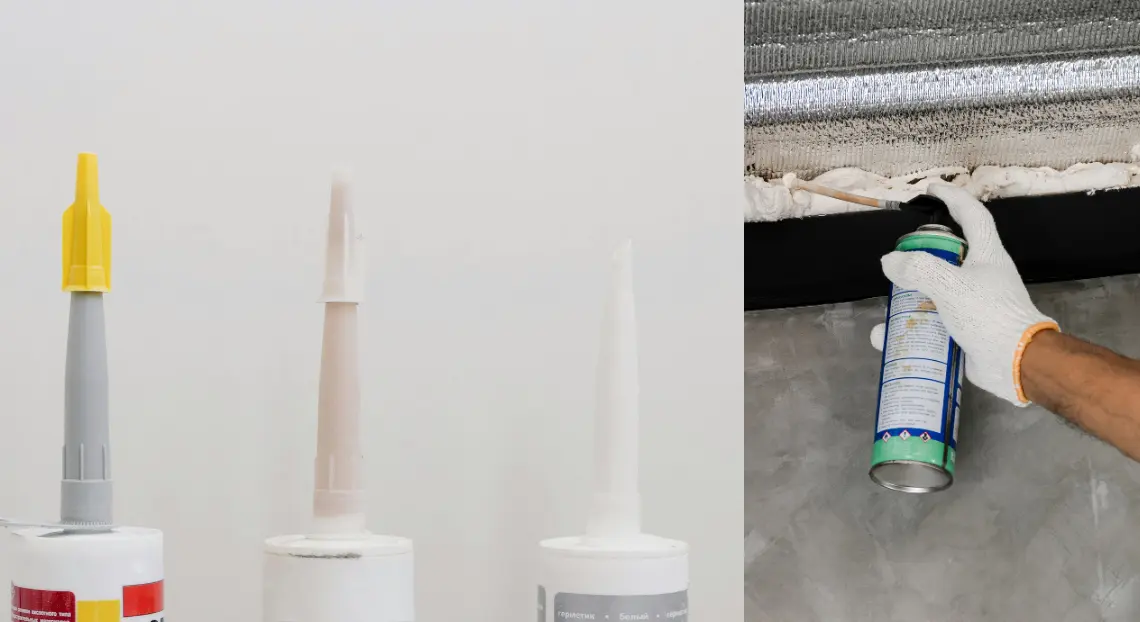
Sealants play a critical role in construction, manufacturing, transportation, and maintenance applications. They are used to create watertight and airtight seals, absorb movement between materials, and provide long-term durability under different environmental conditions. Among the many sealant technologies available today, MS polymer sealants and polyurethane sealants are two of the most widely used options.
Both products are known for their strong adhesion and flexibility, but they differ significantly in terms of chemical composition, weather resistance, safety profile, durability, and application suitability. Choosing the wrong sealant can lead to premature failure, increased maintenance costs, and reduced performance over time.
This detailed comparison explains the differences between MS polymer sealant and polyurethane sealant, helping you determine which option is best for your specific application.
MS Polymer Sealant vs Polyurethane Sealant: Quick Comparison Table
| Feature | MS Polymer Sealant | Polyurethane Sealant |
| Base Technology | Modified Silane Polymer | Polyurethane Polymer |
| UV Resistance | Excellent | Moderate to Good |
| Adhesion | Excellent | Excellent |
| Flexibility | High | Very High |
| Weather Resistance | Excellent | Good |
| Paintability | Yes | Yes |
| Shrinkage | Very Low | Moderate |
| Odor | Low | Higher |
| VOC Content | Low | Higher in some formulations |
| Isocyanates | No | Yes |
| Outdoor Durability | Excellent | Good |
| Abrasion Resistance | Good | Excellent |
| Typical Cost | Higher | Lower |
What Is MS Polymer Sealant?
MS polymer sealant is a hybrid technology that combines many of the advantages associated with silicone and polyurethane sealants. The term MS stands for Modified Silane, which refers to the chemical structure used to create the sealant.
MS polymer sealants cure when exposed to moisture in the air. Once cured, they form a durable and elastic bond that can accommodate movement while maintaining strong adhesion to a wide range of substrates.
These sealants are commonly used in building construction, facade installations, roofing systems, automotive assembly, transportation equipment, and marine applications. Their popularity has increased significantly because they provide excellent weather resistance while avoiding many of the limitations associated with traditional polyurethane products.
One of the biggest advantages of MS polymer sealants is their ability to bond to many surfaces without requiring a primer. They also maintain their appearance and performance for extended periods when exposed to sunlight and harsh outdoor conditions.
Despite these advantages, MS polymer sealants are often more expensive than polyurethane alternatives, which can influence product selection in cost-sensitive projects.
What Is Polyurethane Sealant?
Polyurethane sealant is a moisture-curing material known for its high mechanical strength and excellent adhesion. It has been used for decades in construction and industrial applications where durability and flexibility are important requirements.
Polyurethane sealants create strong bonds with concrete, masonry, metal, wood, and many other building materials. They are particularly effective in applications involving movement joints, flooring systems, and structural connections.
Because of their high tensile strength and abrasion resistance, polyurethane sealants are commonly selected for demanding environments where physical stress is a major concern.
However, polyurethane technology has certain limitations. Extended exposure to ultraviolet light can cause degradation, discoloration, and loss of performance. Many polyurethane sealants also contain isocyanates, which require additional handling and safety precautions during installation.
Although newer polyurethane formulations have improved weather resistance, they generally do not match the long-term UV stability offered by MS polymer sealants.
MS Polymer Sealant vs Polyurethane Sealant: Chemical Composition Comparison
The primary difference between these sealants begins with their chemistry.
MS polymer sealants are based on modified silane technology. They cure through a moisture-activated reaction that creates a durable elastomeric material. This technology does not require isocyanates or solvents, making it a more environmentally friendly option.
Polyurethane sealants are produced using polyurethane polymers that react with moisture to form flexible and durable bonds. Traditional polyurethane formulations often contain isocyanates, which contribute to their strength and curing characteristics.
The chemical composition directly affects performance. MS polymers are designed to provide balanced adhesion, flexibility, weather resistance, and safety. Polyurethane products are formulated to maximize mechanical strength and durability under physical stress.
Because MS polymer formulations contain fewer hazardous components, they are often preferred for projects where environmental regulations, worker safety, or indoor air quality are important considerations.
MS Polymer Sealant vs Polyurethane Sealant: Adhesion Strength Comparison
Adhesion is one of the most important factors when selecting a sealant.
MS polymer sealants provide excellent adhesion to a broad range of materials, including metal, glass, concrete, wood, aluminum, painted surfaces, and certain plastics. In many cases, they can be applied directly without using a primer.
Polyurethane sealants are also known for strong adhesion. They perform exceptionally well on concrete, masonry, wood, and metal surfaces. In heavy-duty construction applications, polyurethane sealants are often chosen because of their proven bonding capabilities.
When comparing overall versatility, MS polymer sealants generally offer an advantage because they can bond effectively to more substrate types with less surface preparation.
Polyurethane sealants may require primers on some materials to achieve optimal adhesion and long-term durability. This additional step can increase labor costs and installation time.
For general-purpose bonding and sealing, MS polymer sealants provide a simpler and more versatile solution. For specialized structural or industrial applications, polyurethane sealants remain a strong choice.
MS Polymer Sealant vs Polyurethane Sealant: Flexibility and Joint Movement Comparison
Sealants must accommodate expansion, contraction, vibration, and movement without cracking or losing adhesion.
MS polymer sealants remain highly elastic after curing. Their flexibility allows them to absorb movement while maintaining a strong seal. This characteristic makes them suitable for windows, facades, roofing systems, and exterior building joints.
Polyurethane sealants are also highly flexible and are often recognized for their ability to handle dynamic movement. They are frequently used in expansion joints, bridge construction, parking structures, and industrial flooring applications.
Both technologies perform well in movement joints, but polyurethane sealants often provide slightly higher movement capability in demanding industrial environments.
For most commercial and residential projects, both products offer more than enough flexibility. The final selection often depends on environmental exposure and long-term durability requirements rather than flexibility alone.
MS Polymer Sealant vs Polyurethane Sealant: Weather Resistance Comparison
Weather resistance is one of the areas where the differences become more noticeable.
MS polymer sealants are specifically known for their excellent resistance to sunlight, rain, humidity, temperature fluctuations, and outdoor exposure. They maintain elasticity and appearance for many years without significant degradation.
Polyurethane sealants perform well in many outdoor applications, but prolonged UV exposure can eventually cause surface deterioration. Over time, this may result in discoloration, chalking, or reduced performance.
In regions with intense sunlight and harsh weather conditions, MS polymer sealants typically provide longer service life and better appearance retention.
Moisture resistance is strong for both technologies, making them suitable for waterproofing and sealing applications. However, the superior UV stability of MS polymers gives them a clear advantage for exposed outdoor installations.
When long-term weather resistance is a priority, MS polymer sealants generally outperform polyurethane sealants.
MS Polymer Sealant vs Polyurethane Sealant: Mechanical Strength Comparison
Mechanical strength refers to the sealant’s ability to withstand stress, impact, abrasion, and physical loads.
Polyurethane sealants have traditionally been known for superior tensile strength and tear resistance. They are designed to perform in demanding environments where physical forces are significant.
Applications such as industrial flooring, concrete joints, transportation equipment, and heavy construction often benefit from the strength characteristics of polyurethane sealants.
MS polymer sealants also provide strong performance, but their primary focus is achieving a balance between flexibility, adhesion, and weather resistance rather than maximizing mechanical strength.
In applications where abrasion resistance is important, polyurethane sealants often hold an advantage. Their ability to resist wear makes them suitable for high-traffic and industrial environments.
For projects where mechanical stress is moderate rather than extreme, MS polymer sealants generally provide more than enough strength while offering additional weather resistance benefits.
MS Polymer Sealant vs Polyurethane Sealant: Curing and Application Comparison
Ease of application can have a significant impact on project efficiency.
MS polymer sealants are generally easy to apply and tool. They produce minimal odor and often require less surface preparation. Their smooth workability allows installers to achieve clean finishes with less effort.
Polyurethane sealants are also relatively easy to apply, but they may require stricter attention to environmental conditions and substrate preparation. Some formulations produce stronger odors during installation.
Curing speed varies depending on temperature, humidity, and product formulation. Both technologies cure through moisture exposure, although exact curing rates differ between manufacturers.
Because MS polymer sealants are less sensitive to certain environmental conditions and often eliminate the need for primers, they can reduce installation complexity.
For contractors seeking efficient installation and simplified application procedures, MS polymer sealants frequently offer advantages.
MS Polymer Sealant vs Polyurethane Sealant: Paintability Comparison
Many projects require sealants that can be painted after curing.
MS polymer sealants are generally paintable and maintain good compatibility with a wide range of coating systems. Once cured, they can usually be painted without affecting adhesion or flexibility.
Polyurethane sealants are also paintable and have long been used in applications where painted finishes are required.
Proper curing before painting is important regardless of the sealant type. Applying paint too early can interfere with curing and affect final appearance.
When installed correctly, both technologies provide satisfactory paintability. The differences between them in this area are relatively small compared to other performance factors.
MS Polymer Sealant vs Polyurethane Sealant: Environmental and Safety Comparison
Environmental and workplace safety concerns have become increasingly important in modern construction and manufacturing.
MS polymer sealants are often considered the safer option because they do not contain isocyanates and typically have low VOC emissions. This makes them attractive for indoor projects, green building initiatives, and environmentally conscious applications.
Low odor is another advantage that improves comfort during installation.
Polyurethane sealants often contain isocyanates, which require careful handling and proper ventilation. While these products can be used safely when proper precautions are followed, they generally involve more safety considerations than MS polymer alternatives.
For projects where sustainability, worker safety, and indoor air quality are priorities, MS polymer sealants offer clear benefits.
MS Polymer Sealant vs Polyurethane Sealant: Maintenance and Service Life Comparison
Long-term performance directly affects maintenance costs and overall value.
MS polymer sealants are highly resistant to UV degradation, weathering, and aging. They maintain flexibility and adhesion over long periods, reducing the need for repairs or replacement.
Their low shrinkage characteristics also help maintain joint integrity throughout their service life.
Polyurethane sealants can provide many years of reliable performance, especially in protected environments. However, outdoor exposure may accelerate aging compared to MS polymer products.
Over time, UV exposure can affect the appearance and performance of polyurethane sealants more significantly than MS polymers.
For applications exposed to sunlight and weather, MS polymer sealants generally offer longer service life and lower maintenance requirements.
MS Polymer Sealant vs Polyurethane Sealant: Cost Comparison
Cost is often a major factor in product selection.
MS polymer sealants usually have a higher purchase price than polyurethane sealants. This difference can be significant in large-scale projects requiring substantial quantities of material.
Polyurethane sealants are often selected because they provide strong performance at a lower initial cost.
However, material cost is only one part of the equation. Installation costs, maintenance expenses, and replacement frequency must also be considered.
Because MS polymer sealants frequently require less surface preparation and offer longer service life in outdoor environments, they can provide better long-term value despite higher upfront costs.
The most cost-effective solution depends on project requirements, environmental conditions, and expected service life.
Best Applications for MS Polymer Sealant vs Polyurethane Sealant
Both sealant technologies have applications where they perform exceptionally well.
MS polymer sealants are widely used in exterior construction joints, curtain walls, facades, roofing systems, window installations, marine environments, and transportation equipment. Their weather resistance and broad substrate compatibility make them highly versatile.
Polyurethane sealants excel in concrete expansion joints, industrial flooring, parking structures, heavy construction projects, and applications involving significant mechanical stress.
In marine environments, MS polymer sealants are often preferred because of their resistance to moisture and weather exposure.
In industrial settings where abrasion resistance and physical durability are primary concerns, polyurethane products continue to be a popular choice.
When to Choose MS Polymer Sealant
MS polymer sealant is often the better choice when outdoor durability is important. Projects involving prolonged sunlight exposure, weather fluctuations, and moisture typically benefit from the superior environmental resistance of this technology.
It is also a strong option when low VOC emissions, reduced odor, and improved workplace safety are priorities. Applications involving multiple substrate types can benefit from the excellent adhesion characteristics and reduced need for primers.
For long-term exterior performance, MS polymer sealants are frequently the preferred solution.
When to Choose Polyurethane Sealant
Polyurethane sealant is often selected when maximum mechanical strength is required. Industrial flooring, heavy construction joints, and high-stress applications benefit from its durability and abrasion resistance.
Projects with tight material budgets may also favor polyurethane products because of their lower initial cost.
When physical performance requirements outweigh concerns about UV exposure and environmental factors, polyurethane sealants remain an effective and reliable choice.
MS Polymer Sealant vs Polyurethane Sealant: Pros and Cons Summary
MS polymer sealants offer excellent UV resistance, strong adhesion to diverse substrates, low VOC emissions, minimal shrinkage, and long-term outdoor durability. Their primary limitation is a higher purchase price compared to polyurethane alternatives.
Polyurethane sealants provide exceptional mechanical strength, strong adhesion, excellent abrasion resistance, and lower initial costs. Their main disadvantages include reduced UV stability, potential discoloration, and additional safety considerations associated with isocyanate-containing formulations.
Which Sealant Is Better for Your Application?
There is no single answer that applies to every project. The best choice depends on the environment, substrate type, performance requirements, and budget.
For exterior construction, facade systems, roofing projects, marine applications, and installations exposed to sunlight, MS polymer sealants generally provide better long-term performance.
For industrial environments, concrete joints, heavy-duty flooring systems, and applications requiring maximum mechanical strength, polyurethane sealants often remain the preferred option.
Understanding the specific demands of the application is the key to making the right selection.
Frequently Asked Questions
Is MS Polymer Sealant Stronger Than Polyurethane Sealant?
Polyurethane sealants generally offer higher tensile strength and abrasion resistance. MS polymer sealants focus more on balanced performance, weather resistance, and versatility.
Is MS Polymer Sealant More Durable Than Polyurethane Sealant?
In outdoor environments, MS polymer sealants are often more durable because they resist UV degradation and weathering better than polyurethane products.
Can MS Polymer Sealant Replace Polyurethane Sealant?
In many applications, yes. MS polymer sealants can replace polyurethane sealants while providing better weather resistance and environmental performance. However, some heavy-duty industrial applications may still favor polyurethane technology.
Which Sealant Has Better UV Resistance?
MS polymer sealants have significantly better UV resistance than polyurethane sealants.
Which Sealant Is Better for Outdoor Applications?
MS polymer sealants are generally considered the better option for outdoor applications because of their superior weather resistance and long-term durability.
Which Sealant Is Better for Concrete Joints?
Polyurethane sealants are often preferred for concrete expansion joints because of their strength and movement capabilities.
Is MS Polymer Sealant Waterproof?
Yes. MS polymer sealants provide excellent waterproofing performance and are widely used in moisture-exposed environments.
Is Polyurethane Sealant Waterproof?
Yes. Polyurethane sealants also provide effective waterproofing and moisture protection.
Which Sealant Lasts Longer?
In outdoor conditions, MS polymer sealants often last longer because they are more resistant to UV exposure and environmental aging.
What Is the Main Difference Between MS Polymer Sealant and Polyurethane Sealant?
The main difference is that MS polymer sealants offer superior UV resistance, environmental performance, and weather durability, while polyurethane sealants provide higher mechanical strength and abrasion resistance.
Conclusion
The comparison between MS polymer sealant and polyurethane sealant shows that both technologies have distinct strengths. MS polymer sealants stand out for their UV resistance, weather durability, environmental benefits, and broad substrate compatibility. Polyurethane sealants excel in mechanical strength, abrasion resistance, and demanding industrial applications.
For most modern exterior construction and general-purpose sealing applications, MS polymer sealants provide the best balance of performance and durability. For heavy-duty industrial environments where physical stress is the primary concern, polyurethane sealants continue to deliver reliable results.
Selecting the right sealant ultimately depends on the specific demands of the project, the expected service conditions, and long-term performance requirements.